
Australia does not have one energy rebate. It has a federal scheme and a set of separate state schemes, each with its own rules, its own certificate type and its own accredited parties. Which ones apply to you depends on where you live and what you are replacing.
We check all of it before we quote. If your property qualifies, the discount appears on the quote. If it does not, we tell you plainly and show you the full price instead of burying the difference.
How these schemes actually work
Every one of them runs on the same underlying mechanism. When an eligible upgrade is installed and documented correctly, the scheme creates tradeable certificates. Those certificates carry a market value, and that value is passed through to reduce what the household pays.
Only an accredited party can create and lodge them. Green Energy Savers works through accredited partners — an Accredited Person under the Victorian programme, an Accredited Certificate Provider in New South Wales. We assess the property, install to the required standard, capture the compliance documentation and hand it to the partner who lodges it. We are not the accreditor, and we are specific about that because plenty of companies in this market are not.
Victoria — Victorian Energy Upgrades
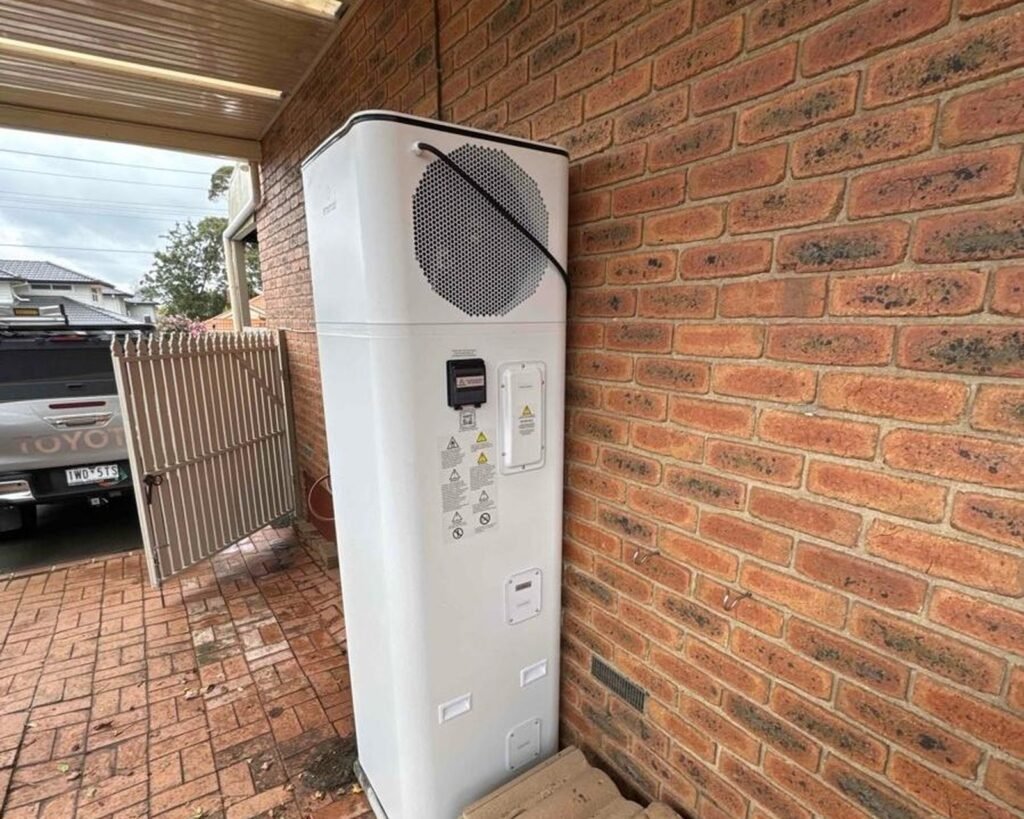
The VEU programme creates Victorian Energy Efficiency Certificates, known as VEECs. It is the scheme most Victorian households encounter, and it covers the upgrades we do most: replacing electric or gas hot water with a heat pump, and replacing old or inefficient air conditioning with high-efficiency reverse cycle.
Support is weighted towards replacing genuinely inefficient equipment. An old electric storage tank or an ageing gas unit generally attracts more than swapping something relatively recent.
New South Wales — ESS and PDRS
New South Wales runs two schemes side by side, and they measure different things.
The Energy Savings Scheme is built around total energy saved and creates Energy Savings Certificates (ESCs). It has covered hot water, air conditioning and lighting upgrades for well over a decade, across everything from large industrial sites down to individual homes.
The Peak Demand Reduction Scheme is built around cutting demand during the summer evening peak and creates Peak Reduction Certificates (PRCs). This is the scheme that covers battery storage, including incentives for connecting a battery to a Virtual Power Plant.
Because they measure different things, a single upgrade can sometimes touch both. We work out which applies before quoting rather than assuming.
Australia-wide — Small-scale Technology Certificates
STCs sit under the federal Renewable Energy Target and apply nationally, regardless of state. They cover eligible solar PV, batteries and hot water systems, and are administered by the Clean Energy Regulator.
One thing worth understanding: the number of certificates an installation generates is calculated partly from how many years remain in the scheme, which runs to 2030. That multiplier is legislated to step down every January. The practical effect is that the same system installed next year generates fewer certificates than it does this year. We will not quote you a certificate value on this page because it moves — but it is a real reason not to sit on a decision indefinitely.
Other states
South Australia runs the Retailer Energy Productivity Scheme, measured in gigajoules. Queensland has no state efficiency scheme, so eligible upgrades there rely on the federal certificates alone.
Our installation footprint is Victoria and New South Wales. We supply stock nationally — see trade supply — but if you are looking for an installer outside VIC or NSW, call us and we will tell you straight rather than taking a booking we cannot service.
What affects your eligibility
- Your state. It determines which scheme applies and what the upgrade is worth.
- The system being replaced. Replacing old electric or gas equipment generally attracts more support than upgrading something recent.
- Property type. Owner-occupied homes, rentals and businesses sit under different arrangements.
- Prior claims at the address. If an upgrade of the same type has already been claimed there, a second claim usually cannot be made.
- The replacement system. It must meet the scheme’s efficiency and product requirements.
- Installation standard. The work has to be completed and documented to specification, which is why compliance photography and certificates are part of every job we do.
What we handle, and what you do
We handle the eligibility assessment, product selection, installation to scheme standard, compliance documentation and the hand-off to our accredited partner for lodgement.
You confirm the property details, sign what the scheme requires, and make the co-payment shown on your quote. There is no claim form for you to chase and no refund to wait on — the discount is already inside the price.
Find out what your address qualifies for
One short conversation. Tell us the address, the system you currently have and roughly what you are paying, and we will come back with what you are eligible for and what the upgrade costs after it is applied.
Call 1300 163 177 or request a quote.
Scheme rules, eligible activities and certificate values change over time and are set by the scheme administrators, not by us. Eligibility is confirmed in writing before any quote is issued. Savings figures are estimates based on typical household usage and will vary with tariff, occupancy and system choice.